Thursday, March 17, 2011

Anticipating the brain drain.

     The time of spring break is upon us so, in order to keep a record of my thoughts before they may or may not disappear, I figure I'll do some writing now.

     The first order of business is settling on a KYHOI or Knock Your Head Off Idea. I'm not making anything final, but this is what I have so far.
Maps impose boundaries and these boundaries are arbitrary.
Now, to fit in with the general theme of the project, this will have to apply to how we are becoming more connected and also, at the same time, less connected. This, I think, is an achievable goal.

     To sort of test the waters, I'm going to do a little thought experiment. (Also, this may be a direction I take my little clip in.) So first off, I want you, the reader, to think of, say the United States. More likely than not, what comes to mind is this...
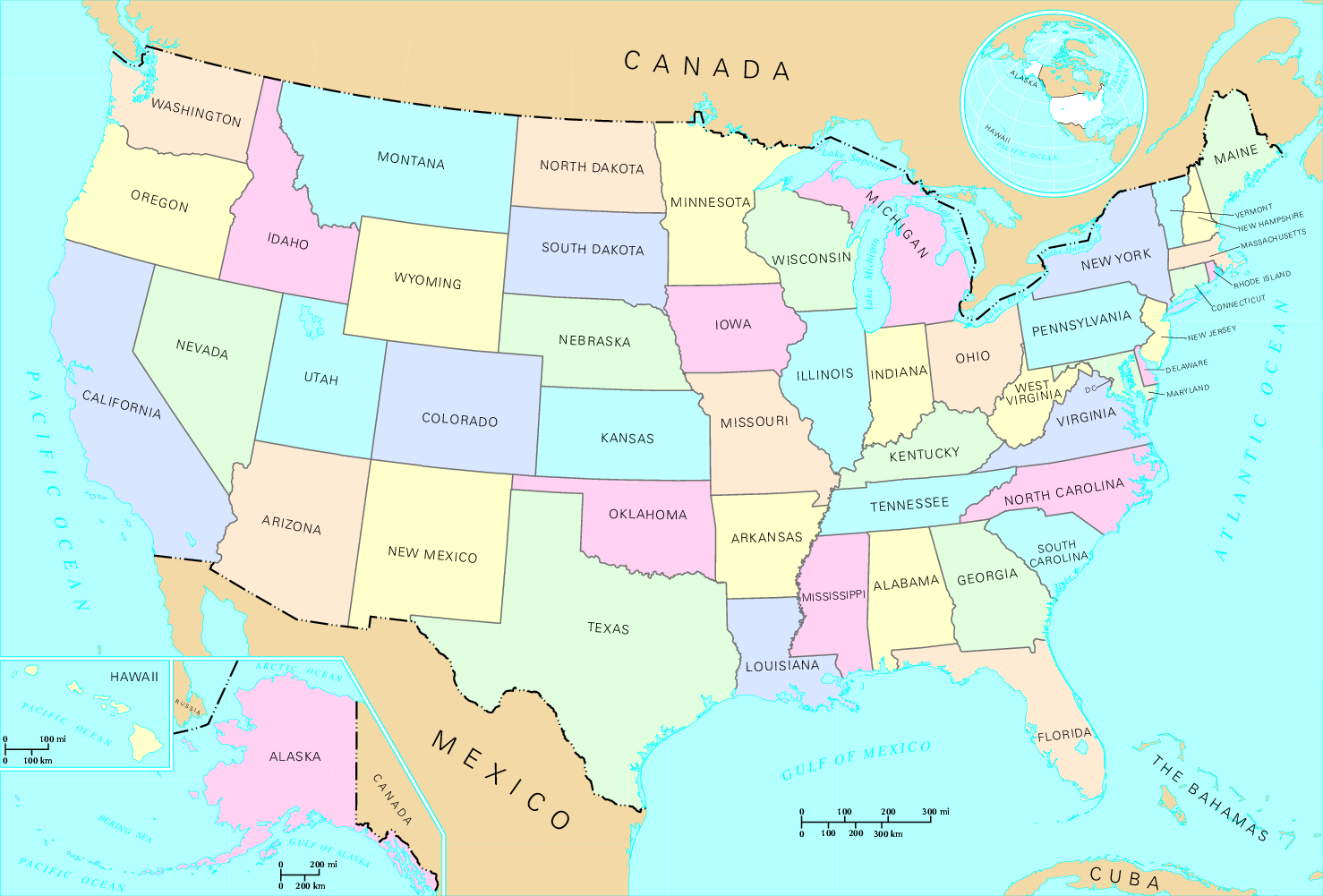
Now, this is all well and good, but what does this map actually tell you? I mean really? What basis does this have in actual reality? For a bit of fun, lets put a bit of topography on this map.
Notice still that the borders are displayed. Now I ask you, why are the borders where they are? Granted, the Mississippi River provides a bit of a boundary, but what about the west? Who decided where the Rockies were going to be divided? Take Wyoming for example, why on earth is is square? I'll tell you why. It was arbitrarily decided to be that way.

    Now I want to go a bit farther back in history to, say, the Classical Period. Specifically, let's look at the Roman conquest of Spain. Now, aside from the Punic War, which is important, but not entirely relevant, let us look at the conquest as a whole. This wasn't a steady march across the entire peninsula slowly conquering individuals. NO. The Romans simply occupied all of the coastal regions and then simply claimed the entirety of the peninsula. The Spanish living in the interior more than likely never even heard of Romans, much less seen them, but they were part of Roman Spain. Of course, this is only early history. As Rome expanded and acquired a larger bureaucracy, control of the interior increased, but even then, what was determined to be Spain only existed for administrative reasons. In fact, Spain was divided down the middle to make Nearer and Further Spain called such because they were Nearer and Further from Rome. The point is, there was a LOT of territory that was mapped as Rome, but the truth is, most of this was uninhabited or simply not administered space.

     Why is this important? Well, as western and other imperial powers became powerful enough to begin controlling other peoples, the trend continued. Large swaths of often unexplored territory were 'colonized', and the borders that were drawn up were often based on the mathematics of the maps of the colonizers. Why is this bad? It separated people who had been close and joined people who hated each other. Take Iraq as an example. The borders of Iraq join Kurds and Arabs, Sunni and Shia, and none of them particularly like each other. The British simply came in and set up their boundaries. What did that do? Take a look at the world today. Where is the turmoil in the world right now? That's right.

     So, borders separate us and they also join us together - even if we don't want to be joined together. The other important thing is, those borders are completely arbitrary. I want you to think about your home town. What separates you from the people next door? What makes you different? Now expand that. What is different about the people on the next street? How about in the next town over? Sure there is distance, but what is distance in the age of communication? The only thing separating you from the rest of humanity is a mindset. That mindset is a border, and it is in part created by maps. Think about maps made in the middle ages. Here there be monsters. People simply didn't know what was out there and so it must obviously be monstrous. This day in age, we have a pretty good understanding of what the world looks like, but we ourselves don't KNOW. So, everywhere there are monsters -> and we don't even think about it.

     Here I could advocate the closing of borders, I've certainly made a case for it, but I don't know if it really is the right thing to do -> or even if its my place to say in the first place. What I do know, is that maps are a tool of the mind, and as a tool, its influence affects us.

Wednesday, March 16, 2011

Project Trailer

Here is my project trailer for the upcoming ethnography. Plans for the ethnography are still a bit shaky, but they're being worked on. Hopefully I'll have something to latch onto soon.

Thursday, March 10, 2011

My Beef with Blogging... and just about everything else

Feel free to pass over this piece entirely -> I'm simply using this as a space to put down some thoughts.
     I would like to take a step back in time for a moment and quote myself, "this endeavor was only begun to fulfill class requirements - those same requirements being to immerse myself in this mediated culture in order to understand it." This Blog exists for the sole purpose of this Blog existing. It's an interesting concept. The problem is, it isn't the Blog that is the medium at all, it's the linking process that is supposed to be implied. The concept of connecting people and ideas together through an electronic medium is the culture. The Blog, then, is only a front, it's only an image of ourselves - not us. Perhaps, or perhaps it is simply an unsolicited opinion. To be honest, I really don't know. The process of linking requires the presence of something to link to. How does one link to a text? Sure, you could link to a Google Books page, but what good does that do you? Really? So, then, you find an article - preferably pertaining to what you are talking about - and you make a connection. Then you have linked whatever you're writing to something vastly more important than your meager opinion or something mundane. You have also made your page a little more blue, which is, I guess, a calming color. But what good is that connection? What do you add?
     I want... the reader, whoever that is (at this point I really don't care) to take a look at the words on this page. What are they? Well, these in particular are those of a ranting college student. The words in the previous entries are those of a college student flailing around in new territory making his best attempt to do what has been asked of him and you know, it will probably continue to be that. Some of the details may change, but the concept will still be the same. It is a school project.
     The thing is, this project is more than just a project, it is a test. I'm going to hearken back to the early days of this class and talk about how we learn. -> We learn by doing. The process of industrializing the education system turns it into an assembly line of facts. (For reference, I'd put a link in here somewhere, but I don't know what I'd link it to. Words are too fleeting.) This process, then, is the product of two systems. On one hand, it is an immersion -> I am learning to Blog. Of course, this is also reliant on how we define what Blogging is. Is it a self reflection, or is it a repository of knowledge for the use of someone else? Anyway, there is also the implication of a final grade. What I do here is viewed by an arbiter and that arbiter assigns a numerical value to what I have done. This number is then viewed by other arbiters to gauge how effectively I perform. This inherently alters my immersion in any facet of this learning process. What I am doing is learning how to learn in a way that is acceptable to an arbiter. Learning how to learn? If one does not know how to learn, how can one learn how to learn, if one does not know how to learn? Or even, THAT one does not know how to learn. How does one learn that they do not know how to learn?
     The question is, though, if these two systems are so different, are we really talking about the same subject here? I have heard it said that people do not learn at school - learn by doing - etc. etc. - but I don't necessarily think I can take that claim at face value. I think it's more a matter of degree as to what they are learning. Sure there are boring teachers and boring subjects, but you still pick up facts along the way -> and it just so happens that some of those facts are important. Now this is obviously very different from the higher level learning that is so often sought, and is not taught. The thing is, such higher level learning can not be taught. It is experienced. I have heard it said that the highest level of learning only happens after one experiences a life crisis. (I'd put a link here too, but I don't know to what so I'll make it blue. It should also be taken into account that I am colorblind, and that this may very well not be blue, defeating the purpose.) There is a distinction, I think, that needs to be made between Knowledge and Wisdom, and I'm not even sure if these are good words to use in order to describe this difference. Essentially, the schooling process is about accumulating knowledge, facts, and all those other good little figures and skills that help us preform better. It's a specialization sort of thing. How we do that is a matter of wisdom. It's akin to the saying that Life is the best of all teachers. But what life teaches is different from what school teaches. They aren't made to teach the same lessens. The lessons of life versus the lessons of specialized skills.
     After taking this detour, let's get back to Blogging and linking, because I am supposed to be immersing myself in it and learning about it - learning by doing. One is supposed to link to the work of experts right? I mean, any other link would just be to, potentially, some dolt with a computer. (I will not argue that I fall DECIDEDLY in the latter category) The thing is though, there are a LOT of dolts with computers. Whenever I am doing research and find a blog in my list of potential resources, I immediately close it and move on. The people with proper points are published. (How's that for alliteration?) This isn't entirely fair, as many people have perfectly valid views on things, but in terms of doing scholarly work it makes sense. Scholastic study is essentially an entrance into an argument. It is generally more civil than what you would think of as an argument, but an argument nonetheless. As such, it needs to operate within certain parameters and needs to be free from those who would make a mockery of it. Perhaps this work does need to embrace the new medium of the internet, and in many ways it already has, but before that can happen the medium needs to be controlled. Scholarly work is work done by scholars. This is simply how the word exists: it's an adjective formed from the root noun scholar to describe the manner in which a scholar does things. A woman who has read two books related to a subject is not a scholar and a man with a strong opinion is ALSO not a scholar. While there is certainly scholarly work that goes on in the Blogosphere, there is also a lot of non-scholarly work as well. "Sure," you might say, "but there is plenty of non-scholarly literature as well!" True, but all of that literature still has controls on it. There is a reason that Harry Potter fan-fiction is not published and exists almost exclusively on computers and the internet. It is, quite frankly, not very good and never stands a chance of getting published. The internet, however, doesn't care if something is good - it simply needs to exist to be integrated.
     This, I guess, brings me to the big question, and my biggest beef with blogging; Why is it so culturally important for everyone to be so connected? Why is more people and more opinions better? All of this information that exists creates a culture of 'whatever' right? Information overloads, the importance of choice, the inherent loneliness... Why is all of this a good thing? Progress? That is a very subjective term. Freedom? Freedom to do what? Nothing. Justice? Justice is only an arbitrary social construct. It gives us enjoyment? The best option so far, but why is individual enjoyment so important?

     Why on earth is the individual so important? Why, when there is so much more that is important, do we care about ourselves? If anyone has an answer, please let me know.

Saturday, March 5, 2011

A vision for the future.

     So, the time has come, or so the walrus said, and it being that time, it is necessary to delineate a project plan. Initial research has been quite hectic and unorganized - where we're going to fit in the class documentary is only going to be decided this week... which means there has been very little to go on in terms of research. It's sort of the, "hey do some general research and when you've read 10 books on various different subjects, you'll learn what you really need to research" making much of that book reading a bit of a time waster. No, that's not fair, reading is never a time waster... perhaps it would be more fair to say that that time could have been spent in reading and researching more relevant and narrow sources, but I digress...

     My plan for the final project? Well, given that my group is all entangled in maps, those maps being able to fit into just about any niche this class project could take, is very flexible. From what I've gleaned from small class discussions on the subject, however, lends me to think that this final project will deal very heavily with unrest and culture among European influenced societies that are culturally very different. This being the case, I figure that we would best fit in by discussing European imperialism and how it was influenced by maps. This is still a fairly large topic and may take some whittling down, but for the time being, it's what I'm going to roll with.

     As for sources, I'll definitely be using The Power of Projections by Klinghoffer. It gives a good overview of the changes in projections over time and also goes into detail about the subtleties of maps and how they mediate us - though this is never stated directly. As I've been thinking about this projects direction, I figured I'd better read up a bit on imperialism. As a result, I found The Imperial Map: Cartography and the Mastery of Empire by Akerman. As one would expect, this book takes a bit more detailed look at map making during the age of Imperialism - with the interesting note of how helpful and necessary it was.  All of this preparation may, however, be in vain as I may have interpreted the situation entirely incorrectly. Time will tell. Until next time then...

Sunday, February 13, 2011

On the origion of mapping

     I must admit that upon starting this project on maps mediating, I was not entirely impressed. I had not yet come to the realization of how interesting maps really are or how they influence how we think. The notion of a 'map' in and of itself is a novel idea and one that parts of the world do not regard as necessary. In the interests of not wasting your precious time rambling about the alterations and complications of maps throughout history, I'll give a brief example.
     In the sixth century BC, the Greeks had developed a greater understanding of geometry (Pythagoras) and come to the conclusion that the earth was spherical rather than flat. This was expounded upon in later centuries by calculating (ridiculously accurately I might add) the circumference of the earth (Eratosthenes) and dividing this circumference into the 360 degrees of a circle - e.g. longitude (Ptolemy - not the Egyptian king though, he was later). In essence, the Greeks asserted map making as a mathematical science rather than a social one. This has profound effects on the world today. For example, the divisions of Africa and East Asia by Europeans were done in a mathematical manner relying on degrees of Latitude and Longitude, rather than taking into account the social realities on the ground. A huge collection of social issues could be discussed as a result of this, but I'll give an example devoid of most of these issues. Take, for example, the country of Egypt. Now, Egypt's western border is a line that is nearly exactly that of 25 degrees east. Most of the population, however, lives within 10 miles of the Nile river (excluding those settlements in on the Sinai) as this is really the only arable land. The rest of Egypt is for all intents and purposes a wasteland that only belongs to Egypt because it is on the Eastern side of 25 degrees East.
     So yes, I have found myself enjoying this topic - rather more than makes me comfortable, actually - and it has opened up for me possibilities for ulterior explanations in other disciplines like history. If you want to learn a bit more about maps, I'd suggest Klinghoffer's The Power of Projections. In it, he describes many of the important changes in map making over the course of human history and how this has impacted and been impacted by global affairs.

Monday, February 7, 2011

The importance of where...

     And so the Mediated Culture class has entered the real work portion and it is time to jot down the first few things of future importance. Before that, however, I should probably comment on media my massive new media usage as a whole. In essence, nothing has really changed. In the course of a day, I have signed up for and personalized several different pages including one for RSS feeds and Twitter. On the first, I have an understanding of how it could be useful, but the problem comes in finding things that update with information you want to see. Even then, it simply acts as a tidal wave of titles that, as of yet, has not tickled my fancy. Then there is twitter... I don't exactly know what to say about it except that I think it's completely worthless. The act of following is, when you think about it, just a little bit stalkerish. Even then, how do I choose who to follow? I mean, I could do the usual and find some run of the mill celebrity like everyone else, but why should I CARE what they say? Why should my attention be focused on them when it could be better served on the people around me, my local community? Anyway, that's my little rant. As you can probably tell, internet mediation is not going seamlessly. I'm just waiting for that cognitive shift that will make it seem alright.

     And now for something completely different...
     well, not really completely different...
     So, it's project time. Given are a loose set of guidelines with the eventual goal of making an ethnography over some facet of mediation. While initial brainstorming was set up in the fashion of locations of interest, the group I joined decided to take a different track. I mean, at the very least, the location of my interest is separated from me by approximately 2000 years, give or take 500. (aka, Ancient Rome) I went in feeling that such an interest would be rather singular in a class of people focused on modern cultures and trends. It might also be hard to find some Romans to talk with about their media experiences, other than sifting through the primary sources - and that would really just fall under the purview of history anyway. The sad truth is, I do not have access to a TARDIS.
     Anyway, back on track... project -> group -> ideas. IDEAS! Right.
After a great deal of large group discussion and brainstorming, the group settled on the intriguing idea of how maps mediate our culture. It's something that the class has touched on already; the concept of the census coming to New Guinea changing the way people lived and organized their communities in order to match western style maps and logs etc. Or at least, how these communities were burned to force such an outcome that was later simply disregarded. Still, the topic has some fruit yet to bear, and I believe the general emphasis is going to lean more toward the United States side of the ocean. How we as a culture are influenced by our predisposition to think of maps in a top down picture of roads. The details, though, are still a bit sketchy and I am not as of yet sure how and ethnography will be able to form from these roots, but these things come with time and I'm sure that many changes will occur in the plan before the final product.

Thursday, January 27, 2011

Taking my first steps into a larger world...

     So, this being my first blog I figure that I may as well follow suit with what I know to be a typical blog post. This is the "hey I don't know what's going on and I'm talking about everything and am really interested in this new technology and really hope that it can connect me in meaningful ways that I am not able to accomplish on my own..." etc. Honestly, I don't know what's going on but with a bit of time I hope to discover what this 'mediated culture' that we live in is all about. While we're being honest, I may as well point out that this endeavor was only begun to fulfill class requirements - those same requirements being to immerse myself in this mediated culture in order to understand it. I intend to do this, but I do not know what the consequences of this intention. Here goes...
     As of right now, my disposition before this immersion, I am not a fan. The obsessions over social media are, to me, a rather excessive waste of time and show our weakness as a culture. People know when some 'celebrity' makes a load of poor choices but never meet their neighbors. Circles of interpersonal relationships are distant, fragmented, and provide no benefit at all for the people involved. Why, then, does it continue? What is the draw of obsessively following a person who has never met you, never cares to meet you, will probably never meet you, and almost assuredly would not bat an eyelash if you were to suddenly vanish off of the face of the earth?
     Also, really, how many people are going to care what you think? As this is part of a class assignment, I know that there will be a number of people with access to these words, but how many will take the time to read them? How many would find them interesting enough to come back in the future? All this, and I even KNOW that people will see it. What if I started this independently and left the substance to flow out into cyberspace? Sure, people are joined all the time in a complex web, the culture would not exist otherwise, but what about all those people who are left out or looked over? How many of them are there? And then, coming back to the old point, why should we even care?
     As for this project...
  • Best case scenario: I discover what it is I have been missing, join a great and new community, and experience life in a new way, etc. Typical best case scenario stuff.
  • Worst case scenario: I become so engrossed and confused in the participation in this experience that I lose all grip on reality slowly becoming insane. You know, typical outlandish worst case scenario stuff.
  • Likely scenario: I learn some things, I do some things, I change some things, and waste a whole bunch of time in the process that would, more than likely, be spent wasting my time doing other things.
     Allons-y